
In this blog series, we share client and student reflections and examples of how philanthropic psychology, or PhilPsych, can be applied to digital fundraising. The series explores how PhilPsych can help fundraisers create digital communications that feel more meaningful, more respectful, and more human.
The first blog in this series focused on a simple but important truth: you cannot email people you do not have. We explored why list growth matters, and how mission-aligned acquisition can help bring the right people into your email journey.
But growing your list is only the beginning.
Once someone has chosen to hear from you, the next question is not simply, “How quickly can we ask them to give?”
It is: “What kind of relationship are we inviting them into?”
Building on the reason someone joined
Someone who has chosen to be on an email list may have a particular interest. Perhaps they downloaded a useful resource, signed a petition, joined a campaign, or made a first donation. The first few communications that follow should recognize their first action and build a connection between what motivated them to take that first step and what they receive next.
Each email then has an important purpose to play in growing the relationship. One might help a person connect with the work more deeply. Another might show how other people support the work. Another might offer an opportunity for the recipient to participate. A planned sequence involves thought around how each communication adds to the supporter's experience.
Digital fundraising expert Charley Jarrett states: “There is no such thing as donor burnout, there is just bad communication and bad content.”
If our communications are irrelevant, extractive, or repetitive, people will quite rightly disengage with them. But when digital content helps supporters feel connected to the cause, informed about the work, and appreciated for their interest and support, email can become part of a fulfilling donor experience rather than a burden.
This is where PhilPsych gives fundraisers a richer way to think about the supporter's experience and their needs within the relationship.
Meeting supporter needs
A useful starting point is to consider what the person might need from you as the relationship develops. Initially that might be appreciation for their interest and support. Later it might help them understand more about the issue, feel more involved in how work is progressing and discover how they can meaningfully contribute.
For example, a person who joins the list via a hand-raiser such as a petition might want updates on the campaign's progress following their initial acknowledgment. The connection between communications helps the supporter feel their place within the work.
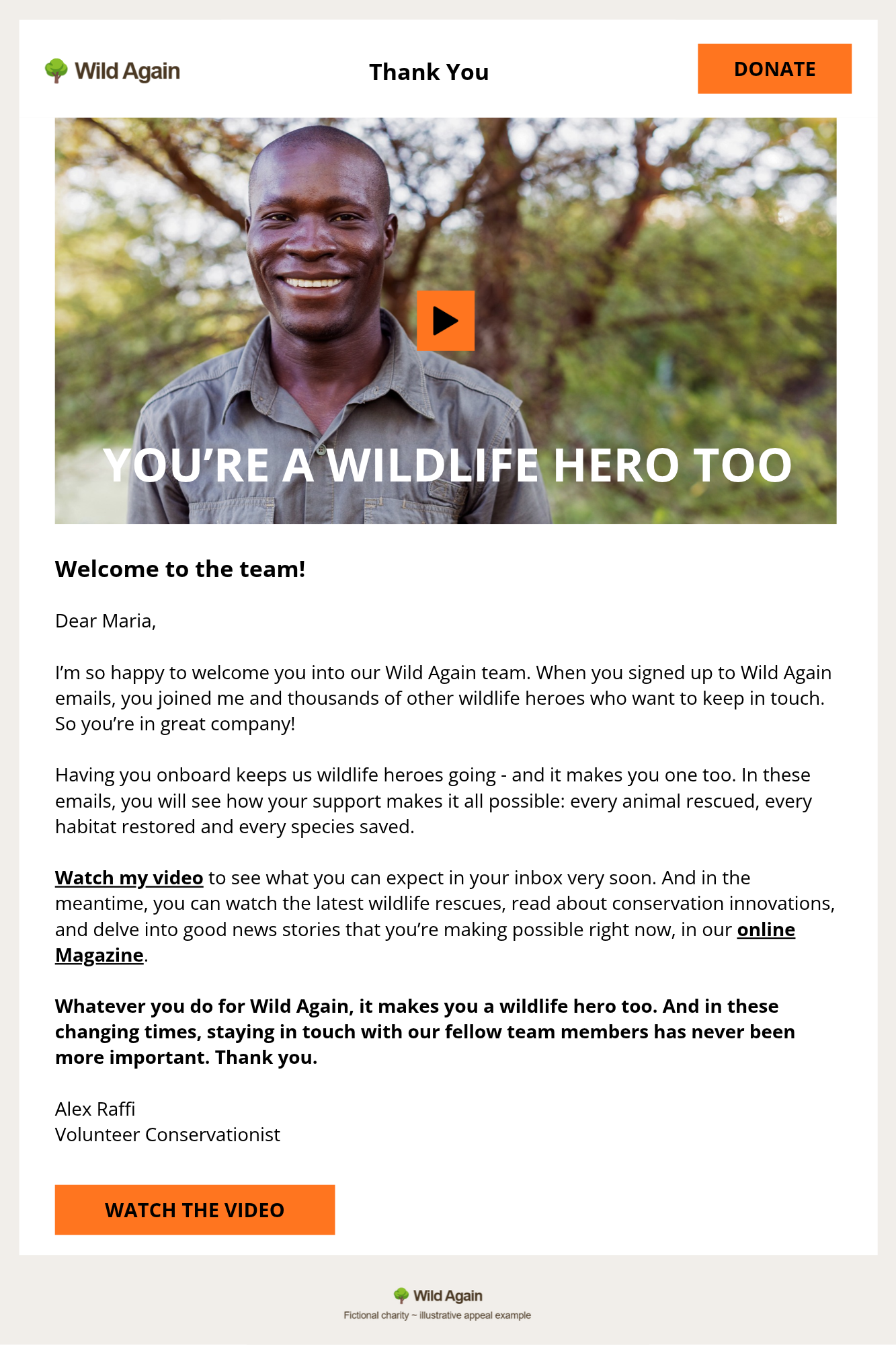
The fictional welcome email below shows how the first communications can begin to establish a relationship. A volunteer conservationist welcomes the subscriber to the team, acknowledges their decision to stay in touch, and introduces some of the experiences they can look forward to.
Source: A fictional email example created by IFSP
The email gives the reader something to explore immediately with an invitation to watch a welcome video or read the online magazine. Wildlife rescues, conservation developments, and good news stories give substance to the invitation to remain connected. By introducing the kinds of content subscribers can look forward to, it also begins to set expectations for the relationship.
For example, Wild Again Magazine might introduce readers to an animal that has been recently rescued. In the next email, Alex could share how that animal is, explain what the team is doing to care for it, and describe what they hope will happen next. When there is an outcome to share, a later email might return to the story and invite anyone who wants to learn more to join a short Q&A with the rescue and treatment team.
A subscriber who joined because they care about wildlife may enjoy the experience of following one rescue over a period of time and understanding what the work involves. The sequence allows supporters the opportunity to choose how involved they would like to be.
You might think about what you told supporters they could look forward to when they subscribed, and what you could share now to help them understand the work and any opportunities to take part in a way that interests them.
What’s next?
In our next blog, we will look more closely at how writing with warmth, care, and respect can help supporters feel recognized for their values and generosity.
Learn more
If you would like to explore how the new science of PhilPsych can strengthen your digital fundraising, you might want to consider our Certificate in Digital Fundraising.
The course is designed for fundraisers who want to move beyond digital tactics and understand how online communications can build deeper, more meaningful, and more sustainable donor relationships. The next cohort begins in February 2027.