
Getting to know your donors, truly
On 4 June 2026, Sarah Colberg, Interim Head of Corporate Partnerships, Catherine Day, Head of Philanthropy at RSPCA UK, and Dr. Jen Shang presented at the CIOF Annual Convention in a session titled “At the Heart of Giving: How You Can Foster Meaningful Donor Relationships with Philanthropic Psychology.”
Across this four-part blog series, we’ll uncover how Catherine and Sarah have guided their teams on a PhilPsych journey: discovering what it truly means to understand their donors. They applied philanthropic psychology to bridge communication gaps between mass donors and those at the corporate or high-value level, and follow practical steps that any fundraiser, even a team of one, can implement to deepen relationships and inspire love and giving.
Blog 1: Getting to know your donors, truly
Blog 3: The success that follows in Philanthropy
Blog 4: You can do it even with a one-person fundraising team
Wealthy donors want to understand how animal welfare can change society.
Catherine shared a belief that resonated deeply with the For the Paws audience: the way a society treats its animals is the truest reflection of its compassion.
Wealthy donors, she explained, want to understand how animal welfare can change society. When Catherine first joined the RSPCA, she experienced a surprising paradox: “I thought I knew the RSPCA, but I soon realised there was a hidden opportunity. Animal welfare is one of the UK’s most loved causes: over a quarter of the public give to animal charities. Yet philanthropists, those individuals capable of transforming the world with a single gift, were almost absent. We had only a handful of major donors, and our average major gift was less than £10,000.”
Catherine saw that they weren’t just missing a few supporters: they were missing an entire demographic. The team discovered that it wasn’t a lack of interest that kept philanthropists away, but a mismatch in communication. Traditional messages about “saving one animal in distress” didn’t resonate. Instead, these donors wanted to tackle the root causes: to build a kinder, more sustainable world where suffering never starts.
Through 18 months of listening and learning, surveying 500 millionaires and interviewing dozens of influential figures, they uncovered something powerful:
“The opportunity is enormous. The majority of wealthy donors would consider giving to animal welfare. A third of those we interviewed already supported the RSPCA, yet their gifts were so small they were hidden in our database.”
Their research also revealed that women and donors under 45 were deeply passionate about animal welfare. Many saw the cause as part of a broader love: for people, for the planet, for life itself. They didn’t want to just “save an animal”; they wanted to see how animal welfare can transform society.
How PhilPsych Bridges the Communication Gap.
Armed with this insight, Catherine and her colleagues embarked on their PhilPsych journey. Philanthropic psychology helps fundraisers shift from transactional asks to conversations grounded in human values. It’s about connecting with a donor’s identity and sense of purpose: inviting them to see their giving as a reflection of who they truly are.
This approach dovetailed perfectly with RSPCA UK’s refreshed brand, which celebrates the positive difference donors can make and highlights how their identity as compassionate “animal champions” helps create a better world for every species.
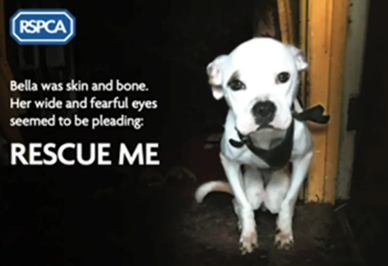
In the past, communications often focused on an individual animal’s suffering (see above). Now, the message centres on the kind of society we can build together: one filled with gratitude for every kind (see below).

This doesn’t mean shying away from the reality of suffering. Rather, it’s about calling people to action through their values, helping them see themselves as part of the solution. See an example below:

As Catherine noted, “We needed to take this even further for our high-value donors, and the psychology of philanthropy gave us the bridge. We began connecting to what our donors love and making them feel good about giving.
If you love children, we are the charity for you, because we teach young people empathy.
If you love the planet, we are the charity for you, because the way we treat animals directly impacts our ecosystems.
By doing this, we stopped asking for donations for animals and started offering partnerships in social change.”
There’s No One-Size-Fits-All Approach
Different organisations and different donors require different conversations. At RSPCA UK, the philanthropy team invested time in understanding their donors’ identities and how they express their love through giving. This personalised approach guides how they communicate with authenticity and alignment to each donor’s values.
Their insights about major donors complement, rather than replace, the work of their mass fundraising teams. And every organisation can uncover unique lessons when applying the same principles.
As Sam Jacklin from AWL Queensland recently shared, after using philanthropic psychology in three different animal welfare charities, “Each time, I discovered something unique about our donors. The framework of identity, love, and psychological well-being is universal, but the lessons come from truly getting to know your own supporters.”
Building this level of understanding takes commitment. Across four years, RSPCA UK trained their philanthropy, mass marketing, communications, and corporate partnerships teams. The result: a more and more unified approach that ensures every donor, at every touchpoint, experiences the same warmth, integrity, and shared sense of purpose as reflected as their very sense of who they are and what is meaningful for their philanthropy to achieve.
In the next post, we’ll explore how both the philanthropy and corporate teams have seen remarkable results as they continue their mission: growing love, growing giving, and creating a kinder world for every animal.
Blog 2: The successes that follow in Corporate Partnership is available here.
If you would like to start your own PhilPsych journey, you might want to explore our Certificate in Philanthropic Psychology course. The next cohort starts September 2026.