
The successes that follow in Corporate Partnership
On 4 June 2026, Sarah Colberg, Interim Head of Corporate Partnerships, Catherine Day, Head of Philanthropy at RSPCA UK, and Dr. Jen Shang presented at the CIOF Annual conference in a session titled “At the Heart of Giving: How You Can Foster Meaningful Donor Relationships with Philanthropic Psychology.”
Across this four-part blog series, we’ll uncover how Catherine and Sarah have guided their teams on a PhilPsych journey: discovering what it truly means to understand their donors. They applied philanthropic psychology to bridge communication gaps between mass donors and those at the corporate or high-value level, and follow practical steps that any fundraiser, even a team of one, can implement to deepen relationships and inspire love and giving.
Blog 2: The successes that follow in Corporate Partnership
Blog 3: The success that follows in Philanthropy
Blog 4: You can do it even with a one-person fundraising team
In the first blog in this series, we shared how Catherine and Sarah discovered an important insight: wealthy donors do want to support animal welfare, but they also want to support it in ways that create meaningful change in society. It is a sentiment shared also in their corporate partners.
If you missed the early lessons that shaped their later successes, we highly recommend starting with their groundwork. Seeing where they began makes their roadmap to success much clearer and the creation of your own success much easier.
In this blog, we’ll share the successes in their corporate partnership and in the next blog, we will share the successes in their philanthropy.
Corporate partners love us!
When we first introduced philanthropic psychology training with both the philanthropy team and the corporate team in the same room, the difference in reactions was fascinating.
Within the philanthropy team, the relevance was immediately felt as we began exploring the human psychology behind giving. With the corporate team, however, there was a sense of healthy and even affectionate scepticism.
Corporate partnerships operate in a world driven by strategy, goals, and business impact. So, the question naturally arose:
Do business leaders really want to talk about “love”?
Indeed, the same question was asked by the audience when Catherine, Sarah, and Jen presented this work at the Chartered Institute of Fundraising’s very last annual convention earlier this month. The audience was curious: how the corporate team integrated love into their conversation. Do business leaders want to feel loved by the causes they support?
Sarah’s answer is “yes”, because business leaders are first and foremost people, and behind each corporate relationship, are people.
This is what Sarah shared:
“Listening first-hand to the people on the frontline is incredibly powerful. On a recent ‘Back to the Cause’ visit, our hospital manager gave a heartfelt thank you that put our partners’ support into a completely new context, even for me.
He explained that for him and his staff, being able to give an animal something as small as a cat toy or the tiniest treat, something that animal may never have experienced before, makes a tangible and meaningful difference. Not only to the animal, but also to the staff, who feel they are doing everything they possibly can to help.”
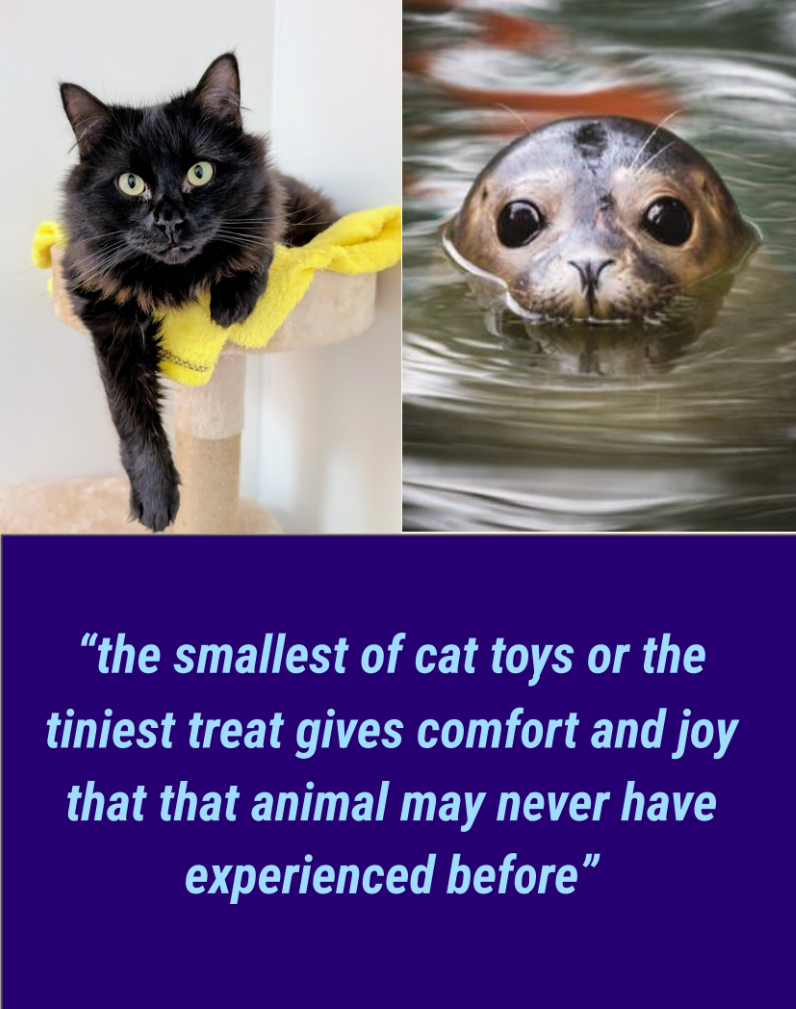
Sarah recalled: “He was so passionate, sincere, and enthusiastic that all of us were in tears. And in the background, a kitten was happily playing with some of the donated toys.”
Moments like this bring partnerships to life. When supporters can see, hear, smell, and feel the impact of their support, it reconnects them with the meaning behind the cause. It can re‑energise a partnership, deepen commitment, and inspire new ideas for what more can be achieved together.
As Sarah said, “You can imagine our meeting afterwards was full of fantastic conversations about what else we could do together.”
Finding ways to love them back
For Sarah, “loving corporate partners back” begins with building strong, genuine relationships. She explains:
“RSPCA started in a coffee shop more than 200 years ago. I love the idea that a simple conversation over a cuppa could spark such powerful change. That inspired me to introduce the ‘Christmas Cuppa’ as part of cultivating relationships with our key contacts.”
This tradition is beautifully simple: a 15‑minute catch‑up with no ask attached: just a chance to celebrate the partnership, say thank you, and look positively toward the year ahead.
Sarah continues:
“Taking time to get to know our contacts as individuals is just as important as understanding their business. When you understand what drives them, what challenges they face, and what keeps them engaged, you can grow, co‑create, and plan together.”
This approach strengthens partnerships and increases the likelihood of not just meeting goals but surpassing them.
She also highlights an important reality:
“In most cases, the charity partnership is only a small part of their wider role. That means you are competing for their time and attention. So, be exciting. Be relevant. And most importantly, help them succeed in their job and in the goals of the partnership.”
Always stay curious
Sarah continued: “One of the most important ingredients in long‑term partnerships is curiosity.”
Successful partnerships grow from a deep and evolving understanding of a partner’s business and the role the charity relationship plays within it. In a rapidly changing world, this means continuous learning.
By asking thoughtful questions from “What is your biggest challenge right now?” to “What are you most excited about this year?” you build trust, insight, and connection.
This understanding opens the door to genuine co‑creation. It allows you to focus time and resources on the opportunities most likely to succeed and ultimately create greater impact together.
If you missed Blog 1: Getting to know your donors, truly, you can read it here.
Blog 3: The success that follows in Philanthropy is now available.
If you would like to start your own PhilPsych journey, you might want to explore our Certificate in Philanthropic Psychology course. The next cohort starts September 2026.